Gideon Hawke turned eighteen!
I mentioned this fact in my fourth novel, A Constant Thunder, but only as a waypoint in his developing relationship with Ruth Munroe (who also turned eighteen). For Gideon, turning eighteen had little tangible effect on his life: he was still an officer in the Continental Army, locked in a protracted war against the most powerful empire on the planet. Turning eighteen was just a barely noticed mile marker on the rugged road of life.
 For Gideon’s author, however, his turning eighteen creates an emotional dilemma: changing genres! While I willfully ignored this milestone in the publishing process for A Constant Thunder (he was seventeen at the start of the novel), Gideon Hawke #5 is forcing me to look fact squarely in the eye: I am no longer a young adult author. You see, I always considered myself a YOUNG ADULT historical fiction author. Gideon was fifteen when we met him, after all. This worked out nicely because my kids were in the same age band: they were in the target audience. They, however, have grown older, as has Gideon. As my son fights his way through college scholarship applications, eighteen year-old Gideon shivers with his men at Valley Forge, and I struggle with the idea of being a “New Adult” historical fiction author.
I could take the easy way out: some people define young adult as involving protagonists twelve to TWENTY years of age. I could kick this can down the road, but unlike Gideon I know when the war will end, and how old he will be. I would only be delaying the inevitable. So, when I publish Gideon Hawke #5, I will select “NEW ADULT” (18-25) as the target audience.
Of course, it’s all rubbish! I’ve seen estimates that about 55% of the readers of young adult novels are adults (I would argue there a far more middle-aged Harry Potter fans than teenaged harry Potter fans); I’m sure the same can be said of new adult novels. Let’s be honest, very few of us have put a book down because “Whoops! This protagonist is not in my age group!” This brings us to the heart of the matter: people read books because they can relate, and because they are good reads. In a sense, I don’t think it really matters what I select from some drop-down menu. I think people enjoy reading about Gideon and Ruth because they are relatable: they are like your two good friends whom you are hoping will get together; and when they do get together you really hope it will work out. Gideon is a bit naïve, and he is constantly learning and growing. Ruth is growing too; it’s a good thing Gideon has her to keep him on the straight and narrow. No matter how old they get, as long as I do my job, there will be something compelling about their story. They will be two ordinary American kids growing up in the most extraordinary of times. Parts of their story will be intimately familiar to most of us, while some of their experiences will be both authentic and almost incomprehensible.
So, yes, maybe now Gideon and Ruth are “new adults.” But they are still very, very human: we can all relate to that.
Robert Krenzel Facebook Author Page: https://www.facebook.com/RobertKrenzelAuthor/
Gideon Hawke Novels Facebook Page: https://m.facebook.com/GideonHawkeNovels/

 Not that the material is not there! There is the almost mythical winter at Valley Forge, the “rebirth” of the Continental Army, the shockwaves caused by the French entry into the war (and the subsequent British strategic realignment), the British evacuation of Philadelphia, and the ensuing clash at Monmouth Courthouse (also steeped in myth and legend).
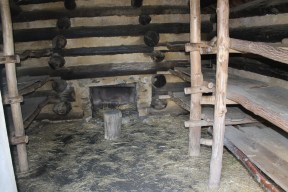 organization. It lacked the polish and uniformity of its foes, but it made the most of what it had. So it was at Valley Forge: the Continental Army endured an unpleasant winter, and it suffered at various times from shortages of food and supplies, but it was still a veteran force that made the most of what was at hand. Yes, Baron von Steuben lent a hand in training it, but would have trained without him. Had von Steuben, in his red coat, been clapped in irons upon arrival in America (as he almost was), I don’t think it would have changed the outcome at Monmouth…the Continental Army would have stood and fought stubbornly. Perhaps von Steuben gave the Continentals a bit more confidence, but I think his real contribution came later in the form of the standardized policies and procedures that made amateurs into professionals.
 I have to be honest: when I started writing the Gideon Hawke Series it never occurred to me I might win an award. Imagine my surprise when this happened! On Saturday I had the great honor of receiving the Kansas Notable Book Award for my novel A Nest of Hornets.
 Gideon Hawke #4: A Constant Thunder is creeping closer to being a reality!



 Regardless of how different society may have been in the 1770s to 1780s, people were still people, and war was still war. The human body reacted to danger and near-death in essentially the same way. So, when people in the 1770s and 1780s were exposed to trauma, many exhibited symptoms of would today be labeled PTS: insomnia, nightmares, nervousness, hypersensitivity, gastrointestinal issues, substance abuse, hearing voices, suicide, and so on. There were other manifestations which are less common today. For example, soldiers who had killed enemy combatants in hand-to-hand combat sometimes reported seeing the “ghosts” of their vanquished foes. But many of the symptoms would be very familiar to a modern combat veteran. Whatever the symptoms, science had not yet come to terms with PTS, and had not made the link between, for example, a soldier’s honorable service and behavior that could be viewed as bizarre if not frightening. The closest contemporary science may have come was applying the term “nostalgia” to this condition; it implied a link to homesickness, and did nothing to help those suffering from PTS.
 Robert Krenzel