Finding Inspiration in the Not-So-Distant Past

We understand history by looking at the past through the lens of the present.

It is an inescapable fact that no person alive today was alive at the time of the American Revolution. Even if there were one or two people around, their perception of the events of that time would be limited to their perspective: what it was that they saw and experienced. People of my generation have lived through monumental events: The Space Program, the Collapse of the Soviet Union, The First Gulf War, German Reunification, The Somalia Crisis, The Balkan Crises, 9/11, the Wars in Iraq and Afghanistan…just to name a few. But none of us has an omniscient view of these events. For each of us, we will always know these things from our own unique points of view.

When I write about the American Revolution, it is from my own perspective. Naturally I try to learn all I can to inform that point of view, but when finger lands on keyboard, my own experiences are shaping the story.
593

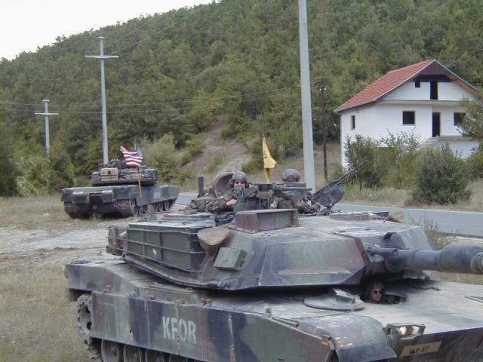
C-66 in Paralovo, Kosovo in 2000.

As I write Gideon Hawke #5 I am telling the tale of Gideon Hawke at Valley Forge. Gideon finds himself in command of a company in the Pennsylvania Line. Perhaps inevitably I am looking at Gideon’s experiences through the lens of my own experience as a company commander in the U.S. Army. Unfortunately for Gideon, he will not be blessed with the amount of talent I had. I am biased, but when C Company, 1-37 Armor deployed to Kosovo in 2000, I had the privilege of working with an incredible group of men; it was an honor to serve by their sides, and frankly they made my job easy and enjoyable. Gideon will have many more difficulties than I did: his authority will even be challenged. But in his interactions with his troops, there will be more than a hint of what made the “Cobra Company” special.


They may be separated by an ocean and a couple of centuries, but the Cobras will find kindred spirits in the men of Hawke’s Company, 9th Pennsylvania Regiment.

Hiss!

Robert Krenzel Author Newsletter Sign-Up: http://eepurl.com/cVgo8D

Robert Krenzel Facebook Author Page:  https://www.facebook.com/RobertKrenzelAuthor/

Gideon Hawke Novels Facebook page: https://m.facebook.com/GideonHawkeNovels/

This is NOT the End of the Line

TWsEvery time I have turned on the news in the past few days I have heard the sound of automatic gunfire; it reminds me of being back in Baghdad in the dark days of early 2006. Scores are dead, and hundreds wounded. What’s more, I just found out that Tom Petty died. Enough already!

At times like this, I have to believe we can make this world a better place, and that something even better is waiting on the other side. We have a responsibility to handle our world, and each other, with care.

Now that Tom is up there with Roy and George, I have to believe the Heavenly Choir is rockin’ just a little bit more. I’m guessing it sounds a bit like this:

Traveling Wilbury’s Handle with Care: https://m.youtube.com/watch?v=L8s9dmuAKvU&feature=share

Traveling Wilbury’s End of the Line: https://m.youtube.com/watch?v=cwqhdRs4jyA

Enjoy! (I’m just looping these…pardon me when I sing along!)

Saratoga Prelude: Stanwix and Oriskany

My new novel A Constant Thunder takes the reader to the Hudson Valley in the lead up to the Battles near Saratoga. By the nature of the plot it glosses over a set of dramatic events that were part of the Hudson Valley Campaign, but took place well west of Albany: the Siege of Fort Stanwix and the Battle of Oriskany.

General John Burgoyne’s Plan for the 1777 Campaign was to divide the United States by seizing the Hudson Valley. An important component of his plan was a diversionary attack from Lake Ontario. Lieutenant Colonel Barrimore Matthew “Barry” St. Leger would command force of up to 1,000, including a few hundred British and German regular troops, augmented by several hundred Loyalists and Native American warriors. St. Leger’s command would move by boat up the Saint Lawrence River into Lake Ontario, through Oswego, NY, up Lake Oneida, over the Oneida Carrying Place, and descend the Mohawk River Valley to threaten Albany. The purpose of this drive was to draw American forces away from opposing Burgoyne’s attack down Hudson River Valley, and to raise a force of Loyalist militia, hopefully over a thousand men, from the Oswego-Albany area. In St. Leger’s way stood Fort Stanwix.

1280px-Grand_Union_Flag_svg

Grand Union Flag

Fort Stanwix was constructed during the French and Indian War, and fell into disrepair afterwards. American troops reoccupied it in 1776 and began repairs, renaming it Fort Schuyler, but it continued to be referred to as “Stanwix.” In May, 1777 Colonel Peter Gansevoort assumed command of the fort and its 750-man garrison, consisting of the 3rd New York Regiment and some Massachusetts troops.

St. Leger’s force arrived at Stanwix on August 2nd, 1777. On August 3rd Gansevoort rejected a demand for surrender, and a siege commenced. One legend has it that the Stars and Stripes flew in battle for the first time over Fort Stanwix, but the Stanwix battle flag was more likely the Grand Union Flag, first flown at Washington’s Headquarters on January 1st, 1776.

Herkimer_at_oriskany

Herkimer at Oriskany

On August 6th, relief force of about 800 militia troops, plus a group of Oneida warriors, under the command of Nicholas Herkimer was ambushed by a 450-man Native American and Loyalist force near Oriskany. The savage battle that ensued cost the Americans over 50% casualties (including Herkimer, who was mortally wounded), with their ambushers suffering over 30% casualties; at the end of the day the relief force retreated. A sortie from the fort during the battle caused significant loss of equipment and personal property to the besiegers, somewhat offsetting the defeat of the relief force. Significantly, Oriskany was the first time members of the Iroquois Confederacy fought against each other: it marked the beginning of an Iroquois civil war, and the downfall of the great Confederacy.


After Oriskany the Siege of Fort Stanwix continued with an ongoing British bombardment and the digging of trenches progressively closer to the fort’s walls.

On August 22nd, word reached the Iroquois in St. Leger’s force that another relief force was approaching: this time it was commanded by American Major General Benedict Arnold. Arnold has sent ahead a captured loyalist, who in exchange for his life greatly exaggerated the size of Arnold’s force. Already demoralized by the casualties at Oriskany and lost goods due to the sortie, the Iroquois abandoned St. Leger. Now hopelessly outnumbered, St. Leger launched a precipitous retreat, leaving much of his equipment to fall into the hands of the Americans.

St. Leger’s defeat secured the American flank near Albany, and allowed American General Horatio Gates to focus all of his available forces, to include Arnold and his relief force, against Burgoyne’s troops. Arnold himself would play a key role in the upcoming battles near Saratoga.

To learn more about the Saratoga Campaign from a participant’s standpoint, pre-order A Constant Thunder HERE!

Interested in FREE BOOKS? Consider joining Gideon’s Vanguard. Click here to learn more!

Robert Krenzel Author Newsletter Sign-Up: http://eepurl.com/cVgo8D

Robert Krenzel Facebook Author Page:  https://www.facebook.com/RobertKrenzelAuthor/

Gideon Hawke Novels Facebook page: https://m.facebook.com/GideonHawkeNovels/

Fort Stanwix national Monument: https://www.nps.gov/fost/index.htm

Oriskany Battlefield State Historic Site: https://parks.ny.gov/historic-sites/21/details.aspx

A Natural Wonder!

Occasionally you have to take the road less travelled by.

This weekend my family and I spent a lot of time in planes and automobiles to attend  a sports competition. On the return trip, we took a detour off of Interstate I-15 to enter the northwest corner of Zion National Park.

Zion NP

For just a short while we left the buzz of the interstate and soaked in one of our Nation’s “Ordinary Miracles.”

Photos don’t really do the place justice. Suffice it to say, it was well worth the detour.

Endangered History: The Sutfin Farm

I have visited a lot of old battlefields. My career as a soldier, and my frequent personal travel, took me to many places where history was made.

In Germany I walked in the footsteps of both Roman legionaries and Napoleon’s Grande Armee. I have gazed across the field at Waterloo, down from Lookout Mountain near Chattanooga, and into the Crater at Petersburg. I have seen century-old shell craters at Verdun and felt the sand on Omaha Beach. With my fellow officers I even stood in awe on the spot where our regimental forebears of the Greatest Generation broke through the German lines at Bastogne.

In some cases these locations were well-preserved, as though time stood still; Antietam is such a place. Sometimes monuments and natural activity have altered the landscape, as at Gettysburg. But almost always there a sense of reverence: a subconscious nod to great events of long ago. Rarely have I been appalled by what I saw in one of these places: until the Sutfin House.

The Sutfin farmhouse was built in the early 1700s; the Sutfins were apparently peaceful people, just trying to extract a living from the fertile New Jersey soil. Until, that is, the British Army marched past in June, 1778. The family wisely hid their valuables and fled. The next day, on June 28th,  the Continental Army marched by the Sutfin Farm and attacked the British rear guard at Monmouth Courthouse, just down the road. In the seesaw fighting that followed, the Sutfin home was at the epicenter of the biggest artillery duel of the American Revolution. It was an anchor for the British right flank at the climax of the battle, and it bore mute witness to the Continental counterattack at the close of the battle. Today it remains a key point of reference in understanding the flow of the battle.

Sadly, the years have not been kind. The Sutfin house today is a dilapidated, graffiti-covered abomination. It broke my heart to see what has become of what should be a historic landmark.

Sutfin Farmhouse

The Sutfin House on the Monmouth Battlefield. Photo taken on May 29th, 2017: Memorial Day.

I do not accept the status quo. I am hereby resolved that in some way Gideon Hawke and his series will work to protect and restore both the Sutfin House and the Monmouth Battlefield. It is not much, but is the least I can do to honor the memory of those who were there, and perhaps restore some of that missing sense of reverence.


Friends of Monmouth Battlefield: http://www.friendsofmonmouth.org/

Monmouth Battlefield State Park: http://www.state.nj.us/dep/parksandforests/parks/monbat.html

Robert Krenzel Facebook Author Page:  https://www.facebook.com/RobertKrenzelAuthor/

Gideon Hawke Novels Facebook page: https://m.facebook.com/GideonHawkeNovels/

2017 Kansas Notable Book: A Nest of Hornets!

anh-cover-smallA Nest of Hornets was just selected for the 2017 Kansas Notable Book Award!

Every year the Kansas State Library selects fifteen books which “highlight Kansas people, places, and events” as Kansas Notable Books.

As a Kansas-based author I submitted A Nest of Hornets, and I literally had a jaw-dropping moment a few days ago when I received the notification that it was selected!

The awardees will be recognized at the 2017 Kansas Book Festival on September 9th, 2017 at the State Capitol in Topeka. I have been invited to be one of the presenting authors at the Festival, which needless to say is a tremendous honor! In addition to speaking about A Nest of Hornets, I will do a book signing, have the opportunity to meet some amazing authors and readers, will likely pick up a great book or three, and will definitely partake of the fare offered by some of the many food vendors!

Many thanks to my family, friends, readers, and fellow authors who encouraged me and made this honor possible!

Now, I feel as though I need to step up my game! Given the success of the Gideon Hake Series thus far, I must ensure that Gideon Hawke #4, A Constant Thunder, does not disappoint!


2017 Kansas Notable Book Awardees: https://kslib.info/1318/2017-Notable-Books.

2017 Kansas Book Festival: http://www.kansasbookfestival.com/

Robert Krenzel Author Facebook page: https://www.facebook.com/RobertKrenzelAuthor

Gideon Hawke Novels Facebook page: https://www.facebook.com/GideonHawkeNovels/

Preparing to Walk the Ground

As I strive to complete the first draft of Gideon Hawke #4: A Constant Thunder, I am also preparing to visit a few sites to do research for Gideon Hawke #5.

The fifth novel in the Gideon Hawke Series will be set in the first half of 1778. While 1777 was a year of decision, with the fate of the Revolution hanging in the balance, 1778 was a year of rebirth: the Continental Army endured a terrible trial at Valley Forge, but used the time to turn itself into a competent fighting force, finally capable of meeting the British on equal terms. At Monmouth this training would be put to the test as the Continentals went toe-to-toe with the British and exchanged volleys with some of the best troops the Crown could put in the field. While tactically indecisive, at the end of the day the British quit the field. More importantly, after Monmouth both sides well understood that the Continental Army had finally come into its own.

From a strategic perspective 1778 marked a transition in the American War for Independence. No longer would the British attempt to draw Washington into a pitched battle in the Northern States: no longer was a British victory in such a battle assured. Once French troops began arriving in the Americas, the British were at a decided disadvantage. So, they would hunker down in New York, and the focus of the fighting would shift to the south. The British would find some success in the Carolinas, but these were local victories that would not change the strategic balance. Moreover, they were offset by a few incredible American victories. After Monmouth, British prospects would become increasingly bleak.

Before all that could happen though, there would be blood, sweat, and tears; Gideon Hawke will be right in the middle of the action.

495So, soon I will be packing up the map case that served me so well in the Army. This time in addition to a compass, binoculars, notebook, pens, and markers, and my map board, it will include maps of Monmouth and Valley Forge. Once again I will walk upon hallowed ground, and try to capture the spirit of the ill-equipped, poorly clothed, determined men and women who made a Nation.

Check for the latest updates on Gideon Hawke #4: A Constant Thunder.

Robert Krenzel Author Facebook page: https://www.facebook.com/RobertKrenzelAuthor

Gideon Hawke Novels Facebook page: https://www.facebook.com/GideonHawkeNovels/

Learning as I Go: Pulling the Thread

It is simply amazing how a simple inquiry can open doors to new learning: how pulling a single thread can reveal a wonderful tapestry.

In working on Gideon Hawke #4: A Constant Thunder I found myself wanting to learn just a little more about a very specific place and time. While trying to discern British General Howe’s intentions in early August, 1777, General George Washington ordered Daniel Morgan’s Provisional Rifle Corps to Maidenhead, New Jersey. There the Corps had a few days’ respite from marching, before the pivotal order that sent it north to Saratoga and into history.

In weaving the narrative of the Gideon Hawke story it seemed this interlude would be a great opportunity for Gideon and the lads to take care of a few pressing matters, and perhaps to get in touch with their Creator. “Where’” I wondered, “would they go to church?” A little Google magic took me to the website of the Presbyterian Church of Lawrenceville (formerly Maidenhead). The website itself was incredibly informative, but then I had the courage to contact the pastor! A few emails later and I was introduced to a small brick church building that in 1777 stood on the highest point around, along the Princeton-Trenton Road. Even better, I was introduced to Reverend Elihu Spencer: writer, missionary to Native Americans (fluent at least in the Oneida language), veteran of the French and Indian War (Chaplain to the New York Troops), rebuilder of congregations in the Carolinas, and pastor of the flocks in Trenton and Maidenhead during the Revolution. I also learned quite a bit about the toll the 1776, Princeton, and winter forage campaigns had taken on Maidenhead. Wow! Suddenly a fleeting thought had become a haunting reality, thanks to the efforts of a few good-hearted history buffs.

In researching and writing A Constant Thunder I have met some wonderful people: Douglas Bicket, Park Ranger at the Saratoga Battlefield; David Manthey, expert on Mohawk and Hudson River bateaux; and Reverend Jeff Vamos and Bill Schroeder of The Presbyterian Church of Lawrenceville, New Jersey. Not only are these folks truly passionate about their historical interests, but they have been incredibly generous in sharing their knowledge and expertise. Gideon Hawke #4 will be a much better reflection of history thanks to them.

Tomb

Tomb of the Unknown Revolutionary War Soldier: Philadelphia, PA

Now, I must admit a bit of trepidation: a truly great writer could weave a beautiful tapestry of words with the kind of input I have received; I’m not sure I can do justice to the material at hand. I am, however, determined to try. My work may fall short of greatness, but if one person reads A Constant Thunder and takes away a better appreciation of the cost of war, and the magnitude of the American victory at Saratoga, it will at least have been a worthwhile effort.


Now…back to writing!

History of The Presbyterian Church of Lawrenceville: https://pclawrenceville.org/our-history/

Check for the latest updates on Gideon Hawke #4: A Constant Thunder.

Robert Krenzel Author Facebook page: https://www.facebook.com/RobertKrenzelAuthor

Gideon Hawke Novels Facebook page: https://www.facebook.com/GideonHawkeNovels/

The Shot Heard Round the World

Here once the embattled farmers stood,

 And fired the shot heard round the world.

     –Ralph Waldo Emerson, Concord Hymn

Stand Your Ground

Stand Your Ground, by Don Troiani


On April 19th, 1775 the world changed forever. Tensions between the British Government and its American Colonies had reached the boiling point. For some time British forces had been making forays into the countryside to confiscate weapons and ammunition, and American militia units had been turning out to observe, taunt, and intimidate the Crown’s troops. On this particular morning in Lexington, Massachusetts, the tensions metastasized into violence. As British troops maneuvered to outflank and disperse the Lexington Training Band, which had formed up on Lexington Common, shots rang out. In short order eight Americans were dead and one British soldier was wounded. Word of the shooting spread like wildfire, and soon militia units were converging on Concord, the British objective, and the road from Concord to Boston.

As the British troops were searching the Concord area, a British light infantry force guarding the North Bridge found itself confronted by a strong militia force, which advanced on the bridge. The shooting at Lexington might have been an accident, but what happened next at Concord was deliberate. A few shots were fired, and then a British captain ordered his men to fire on His Majesty’s subjects. Then, in the first formal act of rebellion, a Massachusetts militia officer ordered his men to fire on the King’s troops. That volley was the shot heard round the world. British troops fell, the light infantry retreated, and Great Britain and its colonies were at war.

Minute_Man_National_Historical_Park_MIMA0070

The North Bridge at Concord


In short order the countryside was aflame. Militia forces ambushed the British time and again; they pursued the British column and harried its flanks. At times British soldiers stood back-to-back, loading and firing at fleeting figures and puffs of smoke on either side of the road. At times the British troops simply ran for their lives. By the time the British made it back to Lexington they were in near panic: their ammunition was nearly exhausted and they had miles yet to go. Mercifully for them, a British brigade had marched to their relief and occupied the hills near Lexington. The combined force then battled its way back to Boston, fighting the entire way. As the sun set, campfires sprung up on the hills overlooking Boston and Cambridge: the British garrison was under siege.

When the sun rose over the Atlantic Ocean on April 19th, 1775, it had shed its light on a peaceful countryside. It would be eight years before peace was fully restored in the newborn United States of America.

You can learn about Lexington and Concord from the participants’ perspective in This Glorious Cause.

Robert Krenzel Author Facebook page: https://www.facebook.com/RobertKrenzelAuthor

Gideon Hawke Novels Facebook page: https://www.facebook.com/GideonHawkeNovels/

Over There: One Soldier’s Perspective on other Soldiers’ Wars

FT-17-argonne-19181Last week I was able to catch much of the live stream of the ceremony marking the Centennial of America’s entry into the Great War. It was wonderfully done, reflected multiple perspectives, and offered insights into the impact that moment had on America and the world. The ceremony wrapped up with a rousing rendition of “Over There.” As I hear the lines “We’ll be over, we’re coming over,” I realized I had tears in my eyes. I wondered, “How could a hundred year-old song move me to tears?” I suppose the reason is because my own experience of war gave me at least a little glimpse into what was in store for the young men and women headed “Over There.”
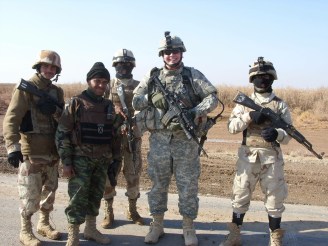
To be clear, between the Balkans, Iraq, and Afghanistan I never set foot in a trench. (Well, that’s not entirely true: in Kosovo I stood in a two-foot deep decoy trench the Serbs dug to draw attention from the well-camouflaged foxholes they had prepared in the woodline nearby.) I never huddled in a shell crater, never endured a sustained artillery barrage, never dodged machine gun fire while negotiating a barbed wire obstacle, was never gassed, and never had my tank break down or get mired in front of the muzzles of several enemy machine guns. That was not my generation’s experience of war.

Our experience was very different. Several years ago I had the great honor of delivering a Posthumous Bronze Star Medal for Valor to the family of a fallen soldier with whom I had served. Before the ceremony I chatted with a few WWII 10th Mountain Division veterans, and I remarked that their accomplishments in Italy were an inspiration to today’s soldiers. I was surprised by the humble reply: “Are you kidding me? We got there in January and the war was over in May; then we were done! You people today go over there for a year, and then you go back over and over again. I don’t know how you do it.”

So it would seem every war is horrible in its own way, and each participant’s experience of war is different. There are moments of horror, but in the midst of the violence and chaos, many, if not most, participants also find moments of valor, excitement, and exhilaration. These highs and lows leave a lasting imprint, and the longer one is exposed to them, them more imprints are left. I think that is true for all wars.

I suppose the most important thing to remember is that when a soldier comes back fromBob and Junood “Over There,” a little bit of “Over There” comes back HERE. Some return better people than when they left. Some returned shattered by their experiences. For most, it is somewhere in between. I can only imagine what went on the minds of veterans of the Great War; I know that I carry a bit of my wars with me wherever I go. If I move over when I pass a broken-down car on the side of the road, it’s to give me room in case the car explodes. If I duck during the weekly tornado siren test, it’s not because I was startled, it’s because in Afghanistan sirens meant a rocket was inbound. If I spend an hour and a half on the phone with someone I’ve not spoken to for years, it’s because at one time he and I were ready to give our lives for each other, and that is a bond that will never be broken.

There is another complicating factor for me: while my military service is over, my wars go on. The dirty roadside where I found my first IED (to be fair, it found me) is still in the hands of Daesh. There is still fierce fighting in Afghanistan. American service members are in harm’s way every day…and I have a son who is seventeen years-old. A hundred years ago he would have been in the target age group to go “Over There,” and I still worry that someday he is going to decide to follow in my footsteps. Maybe that perspective is really why I had tears in my eyes last week.

I did not serve in the Great War and I did not serve in the American Revolution; I can’t claim to know what soldiers experienced in those wars. But I did serve in the Balkans, Iraq, and Afghanistan and I am beginning to understand what I experienced in those places. When I write about Gideon Hawke’s involvement in the American War for Independence, I hope that my involvement in other wars can help illuminate some universal experience of war. Perhaps people will better understand what it means to go “Over There.” If so, then perhaps I will have truly accomplished something.

Robert Krenzel Author Facebook page: https://www.facebook.com/RobertKrenzelAuthor

Gideon Hawke Novels Facebook page: https://www.facebook.com/GideonHawkeNovels/