We understand history by looking at the past through the lens of the present.
It is an inescapable fact that no person alive today was alive at the time of the American Revolution. Even if there were one or two people around, their perception of the events of that time would be limited to their perspective: what it was that they saw and experienced. People of my generation have lived through monumental events: The Space Program, the Collapse of the Soviet Union, The First Gulf War, German Reunification, The Somalia Crisis, The Balkan Crises, 9/11, the Wars in Iraq and Afghanistan…just to name a few. But none of us has an omniscient view of these events. For each of us, we will always know these things from our own unique points of view.
When I write about the American Revolution, it is from my own perspective. Naturally I try to learn all I can to inform that point of view, but when finger lands on keyboard, my own experiences are shaping the story.
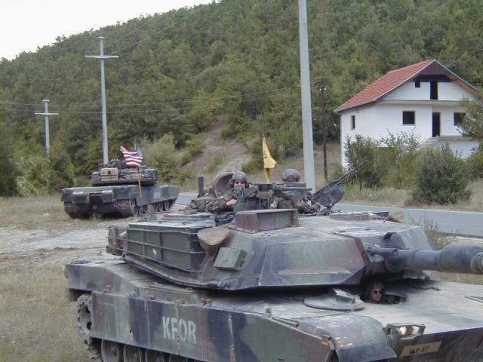
C-66 in Paralovo, Kosovo in 2000.
As I write Gideon Hawke #5 I am telling the tale of Gideon Hawke at Valley Forge. Gideon finds himself in command of a company in the Pennsylvania Line. Perhaps inevitably I am looking at Gideon’s experiences through the lens of my own experience as a company commander in the U.S. Army. Unfortunately for Gideon, he will not be blessed with the amount of talent I had. I am biased, but when C Company, 1-37 Armor deployed to Kosovo in 2000, I had the privilege of working with an incredible group of men; it was an honor to serve by their sides, and frankly they made my job easy and enjoyable. Gideon will have many more difficulties than I did: his authority will even be challenged. But in his interactions with his troops, there will be more than a hint of what made the “Cobra Company” special.
They may be separated by an ocean and a couple of centuries, but the Cobras will find kindred spirits in the men of Hawke’s Company, 9th Pennsylvania Regiment.
Hiss!
Robert Krenzel Author Newsletter Sign-Up: http://eepurl.com/cVgo8D
Robert Krenzel Facebook Author Page: https://www.facebook.com/RobertKrenzelAuthor/
Gideon Hawke Novels Facebook page: https://m.facebook.com/GideonHawkeNovels/

 So what? Well, Saratoga was decisive in the way few battles can claim. It more than outweighed the fall of Philadelphia to the British. While the Americans lost their capitol temporarily, the British lost an army of thousands of men for good. Saratoga was the trigger for France to entire the war on the American side, and the family squabble in America became a global war between empires. Ultimately, of course, the Americans and French would “Burgoyne” another British army at Yorktown, and the British would seek peace.
 Fortunately, science had progressed to the point that scientists had been able to predict the event, and rather than be seen as an omen of good or evil, the eclipse was greeted with indifference by the troops. Perhaps, at best, the moon delivered some much welcome shade to deliver the troops momentarily from the brutal summer heat.
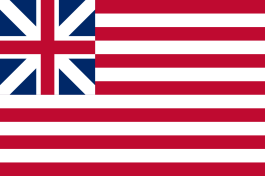


 So, soon I will be packing up the map case that served me so well in the Army. This time in addition to a compass, binoculars, notebook, pens, and markers, and my map board, it will include maps of Monmouth and Valley Forge. Once again I will walk upon hallowed ground, and try to capture the spirit of the ill-equipped, poorly clothed, determined men and women who made a Nation.


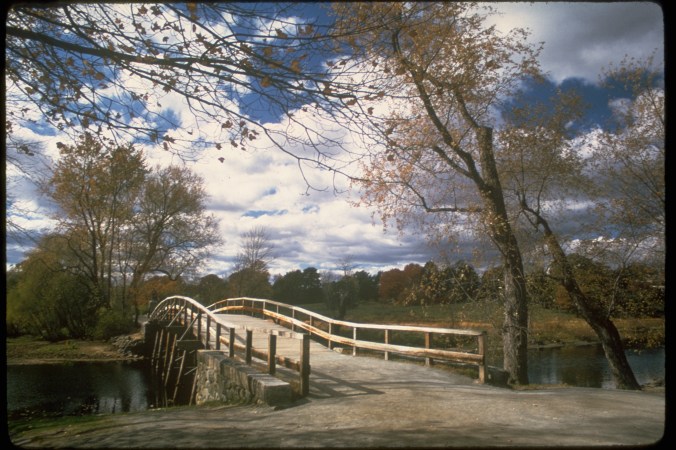

 Last week I was able to catch much of the live stream of the ceremony marking the Centennial of America’s entry into the Great War. It was wonderfully done, reflected multiple perspectives, and offered insights into the impact that moment had on America and the world. The ceremony wrapped up with a rousing rendition of “Over There.” As I hear the lines “We’ll be over, we’re coming over,” I realized I had tears in my eyes. I wondered, “How could a hundred year-old song move me to tears?” I suppose the reason is because my own experience of war gave me at least a little glimpse into what was in store for the young men and women headed “Over There.”
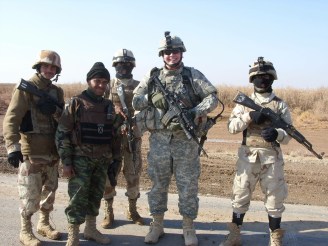 “Over There,” a little bit of “Over There” comes back HERE. Some return better people than when they left. Some returned shattered by their experiences. For most, it is somewhere in between. I can only imagine what went on the minds of veterans of the Great War; I know that I carry a bit of my wars with me wherever I go. If I move over when I pass a broken-down car on the side of the road, it’s to give me room in case the car explodes. If I duck during the weekly tornado siren test, it’s not because I was startled, it’s because in Afghanistan sirens meant a rocket was inbound. If I spend an hour and a half on the phone with someone I’ve not spoken to for years, it’s because at one time he and I were ready to give our lives for each other, and that is a bond that will never be broken.


 Robert Krenzel