One advantage of a stay-at-home order: the first draft of A Bitter Harvest is almost complete!
At the moment I am working on one of the climactic chapters: the Battle of Newtown. On

Location of breastworks.
August 29th, 1779, Thayendanegea, a.k.a Joseph Brant, led a force of about 1,000 Haudenosaunee (Iroquois) warriors and 200-250 British/Loyalist troops. Having built a well-camouflaged defensive breastwork behind a creek bed, with its flanks tied into difficult terrain, Thayendanegea intended to lure Major General John Sullivan’s Western Army of just over 3,000 troops (almost entirely Continental soldiers) into a trap. By ambushing Sullivan’s vanguard, the Haudenosaunee hoped to cause Sullivan to rush into a disastrous headlong charge. By inflicting heavy casualties, Thayendanegea might be able to turn back Sullivan’s invasion of the Haudenosaunee homeland.
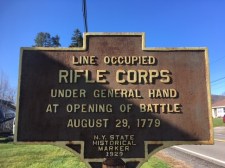
Rifle Corps position.
It did not work. Morgan’s Rifle Corps, the vanguard of Sullivan’s force, spotted the enemy positions. Brigadier General Edward Hand engaged with long range rifle fire, and Sullivan sent up his artillery regiment to help fix the enemy in place. Meanwhile, he sent two brigades in a wide movement around Thayendanegea’s eastern flank. Only by a desperate counterattack at the last moment was Thayendanegea able to prevent his defeat from becoming a massacre. The Haudenosaunee and their allies escaped, but their spirit was broken. There would be further bloody incidents in the campaign, but never again would so many Haudenosaunee take to the field to defend their land. The sun was setting on the League of Six Nations and the Haudenosaunee way of life.

The creek bed, from the breastwork.
In November I had the opportunity to retrace Sullivan’s route, from Wilke-Barre, Pennsylvania up to Seneca Lake. It was humbling to see the terrain Sullivan’s Army overcame, and the beautiful land for which the Haudenosaunee were fighting.
I hope I do justice to dramatic events which unfolded in this rugged, stunning corner of our country many years ago!
Happy reading!
Robert Krenzel Facebook Author Page: https://www.facebook.com/RobertKrenzelAuthor/
Gideon Hawke Novels Facebook Page: https://m.facebook.com/GideonHawkeNovels/

 Research is a critical part of writing historical fiction. I consider it critical to “get it right” when it comes to things big and small: weather, terrain, the sequence of events, language, uniform and clothing, and so on. For the first five books in the Gideon Hawke Series, research was mostly a matter of finding information.
 Not that the material is not there! There is the almost mythical winter at Valley Forge, the “rebirth” of the Continental Army, the shockwaves caused by the French entry into the war (and the subsequent British strategic realignment), the British evacuation of Philadelphia, and the ensuing clash at Monmouth Courthouse (also steeped in myth and legend).
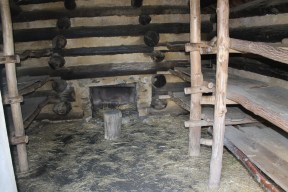 organization. It lacked the polish and uniformity of its foes, but it made the most of what it had. So it was at Valley Forge: the Continental Army endured an unpleasant winter, and it suffered at various times from shortages of food and supplies, but it was still a veteran force that made the most of what was at hand. Yes, Baron von Steuben lent a hand in training it, but would have trained without him. Had von Steuben, in his red coat, been clapped in irons upon arrival in America (as he almost was), I don’t think it would have changed the outcome at Monmouth…the Continental Army would have stood and fought stubbornly. Perhaps von Steuben gave the Continentals a bit more confidence, but I think his real contribution came later in the form of the standardized policies and procedures that made amateurs into professionals.

 That bears some explanation. The popular mythology of Valley Forge is well-established: a ragged, beaten Continental Army staggers into Valley Forge after losing another campaign, and huddles together, waiting for deliverance. A few months later it rises from the ashes of its campfires, retrained and revitalized, ready to take on the British. But is that correct? Probably not.
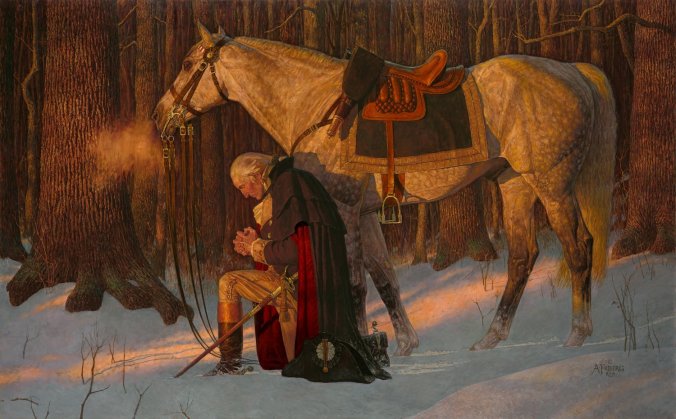


 So, soon I will be packing up the map case that served me so well in the Army. This time in addition to a compass, binoculars, notebook, pens, and markers, and my map board, it will include maps of Monmouth and Valley Forge. Once again I will walk upon hallowed ground, and try to capture the spirit of the ill-equipped, poorly clothed, determined men and women who made a Nation.
 Gideon Hawke #4: A Constant Thunder is creeping closer to being a reality!
 Robert Krenzel